
This is the question I get more than almost any other.
"I want an EV. But I park on the street. Or in an apartment garage with no plugs. Can it still work?"
The short answer is: sometimes.
The honest answer is: run the numbers before you convince yourself.
Here's where the math usually lands.
The problem isn't the car. It's the time.
Charging at home takes five seconds. You plug in when you park. You wake up with a full battery. You never think about it.
Charging without home access is a different life.
You plan your week around charger locations. You sit in parking lots for thirty minutes. You pay more per kilowatt-hour than homeowners do. You learn which grocery stores have working chargers and which ones have been broken for six months.
Some people don't mind this. Most people underestimate how much it changes their routine.
The cost math changes completely
Home charging is cheap. Really cheap. That's where most of the EV savings come from.
Public charging is less cheap. Fast charging is often close to gas prices on a per-mile basis.
Here's what I've seen in Indianapolis winter data:
Home charging: significant savings per mile compared to gas
Level 2 public charging: moderate savings, sometimes break-even
DC fast charging only: minimal savings, sometimes none
If you can only fast charge, the fuel savings argument for an EV starts to fall apart.
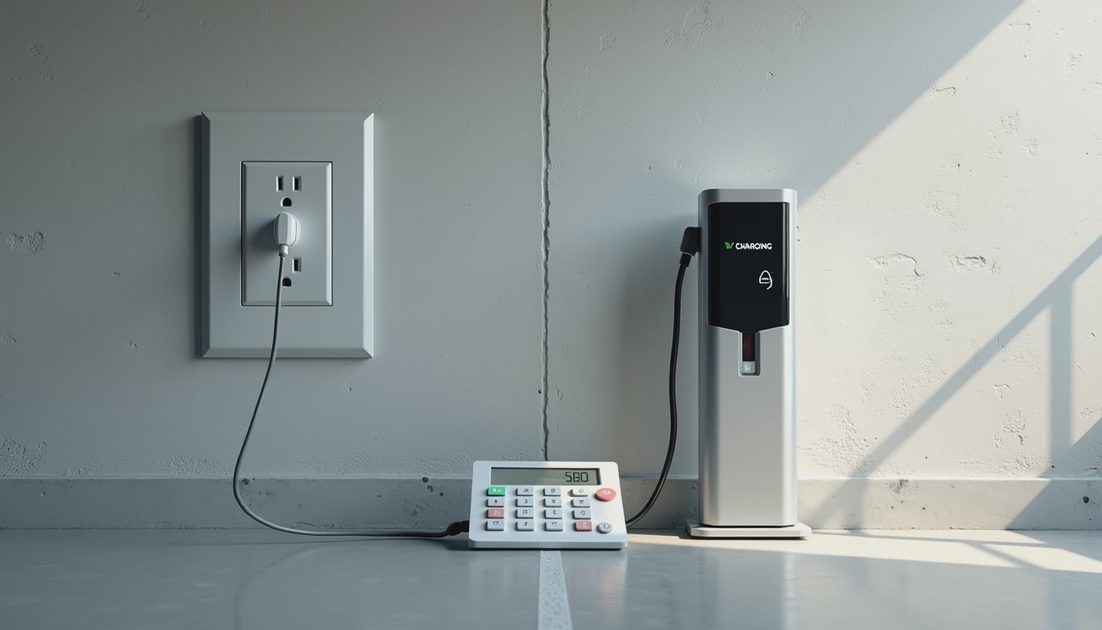
Run your own numbers. Take the public charging rates near you. Compare to gas prices. Calculate your weekly miles. See what's left.
For many renters and street parkers, the answer is "not enough to make the switch purely for savings."
The convenience tax is real
Even if the cost math works, there's another factor.
Public chargers break. They get occupied. They have time limits. They require apps you don't have yet.
I've watched friends spend an extra hour each week managing their EV charging. That hour has value. Maybe you don't care. Maybe you do.
I'm not saying it's unbearable. I'm saying be honest with yourself about whether you want to add that task to your week.
When it still makes sense
Home charging is ideal. But some people without it still come out ahead.
Three scenarios where the math can work:
You have reliable workplace charging.
This changes everything. You charge while you work. It's effectively home charging at a different location. If your employer offers free or cheap charging, the home charging problem disappears.
You drive very low miles.
If you only drive a few thousand miles per year, you charge infrequently. The inconvenience is minor. You can top off at a public charger once a week or less.
You really want that specific EV.
Some people want an EV for reasons beyond cost. Performance. Driving experience. Personal preference. That's valid. Just don't pretend the math is the reason.
When it doesn't make sense
Three scenarios where I'd say wait or buy a hybrid instead:
You drive average or high miles and have no workplace charging. That's a lot of public charging sessions. The time adds up. The cost savings shrink. The convenience suffers.
You live in a cold climate. Cold weather cuts EV range significantly. That means more charging sessions. More time. More planning. Winter in Indianapolis is real. Winter in Minneapolis or Chicago is worse.
You have no patience for logistics. Some people don't mind planning their week around charger locations. Some people hate it. Know which one you are before you buy.
The hybrid alternative
If the EV math doesn't work without home charging, look at hybrids.
A standard hybrid gives you most of the fuel savings without any of the charging logistics. You fill up at gas stations like always. The car handles the electric part itself.
A plug-in hybrid can be a middle ground if you have occasional access to a charger but not daily home charging.
Don't dismiss hybrids as boring. The boring car you actually drive is better than the exciting car that annoys you every week.
What I tell friends who ask
Here's my standard answer when someone in Indianapolis asks me this question.
If you have home charging or workplace charging, an EV probably works for you.
If you have neither, add up the public charging costs and think honestly about whether you want to spend part of your week managing battery percentage.
For most renters and street parkers, a hybrid is the smarter move right now.
That might change as public charging gets better. It hasn't changed yet.
One rule. No exceptions.
If the numbers don't work, the car doesn't work.