I used to get attached.
See a car I liked. Imagine myself driving it. Start making excuses for its problems.
The price is a little high, but it's the color I want.
The maintenance record is missing a few entries, but it seems clean.
The dealer is pushy, but the car is right there.
I talked myself into bad decisions. More than once.
Then someone gave me advice that changed how I buy cars.
"Walk away faster. The right car won't make you ignore red flags."
Best car advice I ever got.
The Cost of Not Walking Away
Every time I ignored a red flag, I paid for it.
The car with the missing maintenance records? Needed a major service within six months. Cost me a significant amount.
The car I overpaid for because I wanted that specific color? Lost more on depreciation than the color was worth.
The car I bought from the pushy dealer because I was tired of looking? Had hidden damage the dealer never disclosed.
I didn't make those mistakes because I'm bad at buying cars. I made them because I wouldn't walk away.
I let attachment override my own rules.
What Walking Away Actually Means
Walking away doesn't mean storming out of a dealership in anger.
It means saying "no" and meaning it. Not "no, unless you can fix this one thing." Just no.
It means closing the listing on a car that fails your checks, even if the photos look good.
It means ending a negotiation when the numbers don't work, even if the salesperson is being nice.
It means leaving a private seller's driveway without buying the car you drove an hour to see.
Walking away is a skill. You practice it. You get better at it. And every time you do it, you save yourself from a purchase you would regret.
The Test I Use Now
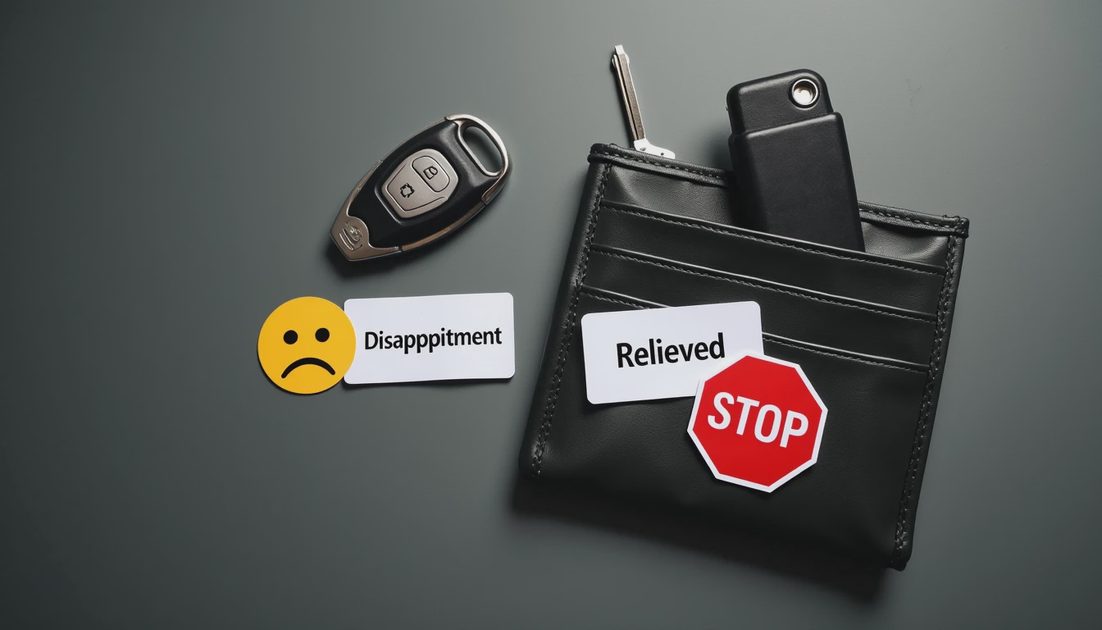
Before I make any offer on a car, I run a mental test.
If this deal falls apart right now, will I be disappointed or relieved?
Disappointed means I actually want this specific car. That's fine. But I need to check my emotions. Am I attached to the car or the idea of being done shopping?
Relieved means I knew something was wrong. The price was too high. The seller was hiding something. The car wasn't right. I was going to buy it anyway because I didn't want to start over.
If I feel even a little bit relieved at the thought of walking away, I walk away.
That test has saved me more times than any inspection or price comparison.
The Dealer Pressure Trick
Dealers know you don't want to walk away.
You've spent time looking. You've driven to the lot. You've taken the test drive. You've sat down at the desk.
Walking away feels like wasting all that effort.
That's exactly what they're counting on.
The sunk cost fallacy is powerful. You've already invested time and mental energy. Leaving feels like losing.
But staying and buying a bad deal is losing more. The time you've already spent is gone either way. The only question is whether you throw money after it.
I've walked out of dealerships after two hours of negotiating. Felt strange for about ten minutes. Then felt great.
The car I eventually bought came from somewhere else. Better price. Better condition. No pressure.
The Private Seller Temptation
Private sellers are different from dealers. Less polished. More personal.
That makes walking away harder.
You met someone. They told you about the car. Maybe they seemed like a good person. You feel bad saying no after they spent time showing you the car.
I've been there. Bought a car partly because I didn't want to disappoint the seller.
That's not a good reason to spend thousands of dollars.
A private seller is trying to sell you something. They're not your friend. They're not doing you a favor. A fair transaction is fine. But guilt is not a negotiation tool you should accept.
Walk away. They'll find another buyer. You'll find another car.
What You Gain by Walking Away
Every time you walk away, you get something.
You get time to keep looking. The next car might be better.
You get leverage. A seller who knows you're willing to leave has to actually negotiate.
You get clarity. Once you're out of the situation, you can think clearly about whether the car was right.
You get practice. Walking away gets easier the more you do it.
And you get money. The money you didn't spend on a bad deal is still in your account.
Walking away doesn't lose opportunities. It preserves options.
The Best Walk I Ever Did
I was looking at a used car a few years ago. Good model. Good mileage. Price was slightly above market.
The dealer wouldn't budge. Kept telling me about the "great condition" and "low miles." Wouldn't show me service records.
I wanted the car. It was the right color. Right options. I was tired of searching.
I almost bought it.
Then I ran my test. Would I feel relieved if this fell through?
Yes. Something felt off.
I walked away.
Found the same car two weeks later. Same year. Similar miles. Full service records. Lower price. Bought it. Still have it.
Walking away didn't cost me a car. It saved me from the wrong one and led me to the right one.
The One Exception
I'll tell you the only time I don't walk away fast.
When the car is genuinely rare. Not "rare" as in an uncommon color. Rare as in you've been searching for months and this is the only example that meets your requirements.
Even then, I don't ignore red flags. I just adjust my walk-away speed.
Normal car? Walk away at the first real red flag.
Rare car? Investigate first. Maybe the flag isn't as red as it seems. But if it is, walk away anyway.
There's always another car. Even for rare ones. Just takes longer to find.
How to Practice Walking Away
Start small.
Next time you're shopping for anything — not just cars — practice saying no and leaving.
Salesperson won't give you a straight answer? Walk away.
The price doesn't match the value? Walk away.
Something feels off but you can't name it? Walk away.
The more you do it in small situations, the easier it becomes in large ones.
Car buying is a high-stakes version of the same skill. Practice on lower stakes first.