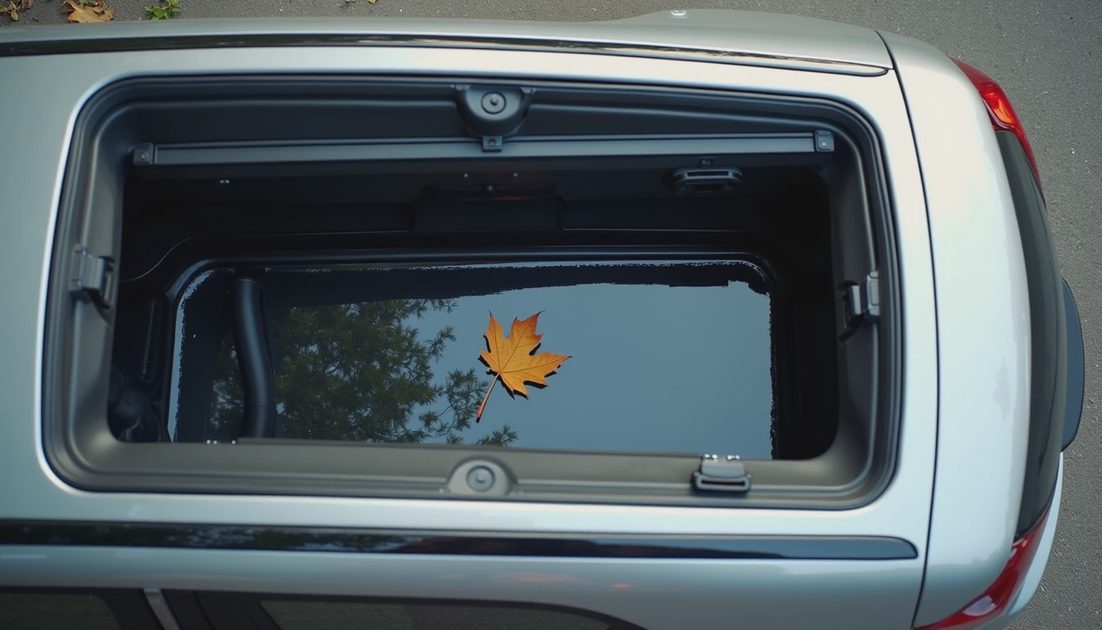
Sunroof. Heated seats. Premium sound. Big touchscreen.
I get it. These are the fun parts of car shopping.
But here's what most people do wrong. They start with features. They find a car that has what they want. Then they figure out if they can afford it.
That's backwards.
You should start with ownership risk. Features come last.
Here's why.
Features don't cost what you think they cost
That sunroof isn't just part of the purchase price.
It's a hole in the roof with seals that dry out, a motor that can fail, and drains that clog. When it breaks, it's expensive.
Those power folding mirrors look great until one stops folding. Then you're looking at a bill that will ruin your week.
The big touchscreen controls everything until it freezes or delaminates. Then you lose climate control, audio, and basic settings until you replace the whole unit.
I'm not saying every feature breaks. I'm saying features are systems. Systems have failure rates. Failure rates have costs.
Most people never price that risk.
The two types of ownership risk
When I look at a car, I split risk into two categories.
Mechanical risk. Engine. Transmission. Cooling system. Brakes. The stuff that makes the car move and stop.
Feature risk. Everything else. Screens. Motors. Sensors. Cameras. Power seats. Liftgates. Lane departure warnings that beep at nothing.
Here's what's interesting. Mechanical risk is easier to predict. Certain engines have known problems. Certain transmissions fail at known mileages. You can research this.
Feature risk is harder to predict and often more expensive to fix relative to the car's value.
A seven-year-old luxury car with air suspension, adaptive headlights, and five cameras is a feature risk minefield. Each of those systems can fail. Each failure costs money.
The same car without those features is less fun. It's also less likely to hand you a four-figure repair bill.
The question you should ask first
Before you look at a single feature, ask this:
What is the likelihood that this car costs me money I didn't plan for?
That question leads you to reliability data. Common problems. Owner forums. Recalls. Service bulletins.
After you answer that, you know what you're getting into. Then you can look at features.
Most people do the reverse. They fall in love with the car. Then they research problems to convince themselves it's fine. Confirmation bias, not analysis.
I've done it myself. It's expensive.
The trim level trap
Higher trims have more features. More features mean more things that can break.
That's not an opinion. That's just counting.
I'm not saying buy the base model. I'm saying know what you're paying for in risk, not just pleasure.
When I compare trim levels, I ask two questions:
Does this feature genuinely improve my experience, or is it something I'll forget about after a week?
What does it cost to fix this feature if it breaks out of warranty?
Some features are worth the risk. Adaptive cruise control on a highway commuter? Worth it. Power folding mirrors on a car with a narrow garage? Worth it.
A panoramic roof that adds weight, reduces headroom, and will eventually leak or break? I've passed on cars specifically because of that feature.
The age and mileage factor
Feature risk changes as cars age.
A three-year-old car with lots of features is less risky than a seven-year-old car with the same features. The seven-year-old car is closer to the failure window for motors, seals, and electronics.
I've watched people buy an older luxury car for the features. Heated and cooled seats. Air suspension. Power everything. The purchase price looked great.
Then the air suspension compressor failed. Then one seat stopped cooling. Then a door lock actuator died.
The repairs added up to a significant percentage of the purchase price within two years.
They didn't buy a cheap luxury car. They bought a cheap car with expensive repair bills.
What I do instead
Here's my process.
Step one:
Research the model's known problems. Not anecdotal. Patterns. If multiple owners report the same issue, that's data.
Step two:
Identify which features are tied to those problems. Skip those features if possible.
Step three:
Compare total ownership cost across trims. Including estimated repair probability. Not just purchase price.
Step four:
Only then look at the feature list.
This takes longer than scrolling through listings sorted by "leather seats."
It also costs less over time.
A specific example
I looked at two versions of the same car recently. Same year. Similar mileage.
One was a mid-tier trim. Heated seats. Standard sound. Basic screen.
One was a top-tier trim. Cooled seats. Premium sound. Bigger screen. Power liftgate. Surround cameras.
The top-tier cost more upfront.
But that wasn't the whole picture. The power liftgate had known motor failures. The bigger screen had known delamination issues. Both were expensive fixes.
I ran the numbers including probability of those repairs over three years.
The mid-tier trim came out ahead on total cost of ownership. Not just upfront. Total.
The features looked nice on the spec sheet. They looked less nice on the repair estimate spreadsheet.