
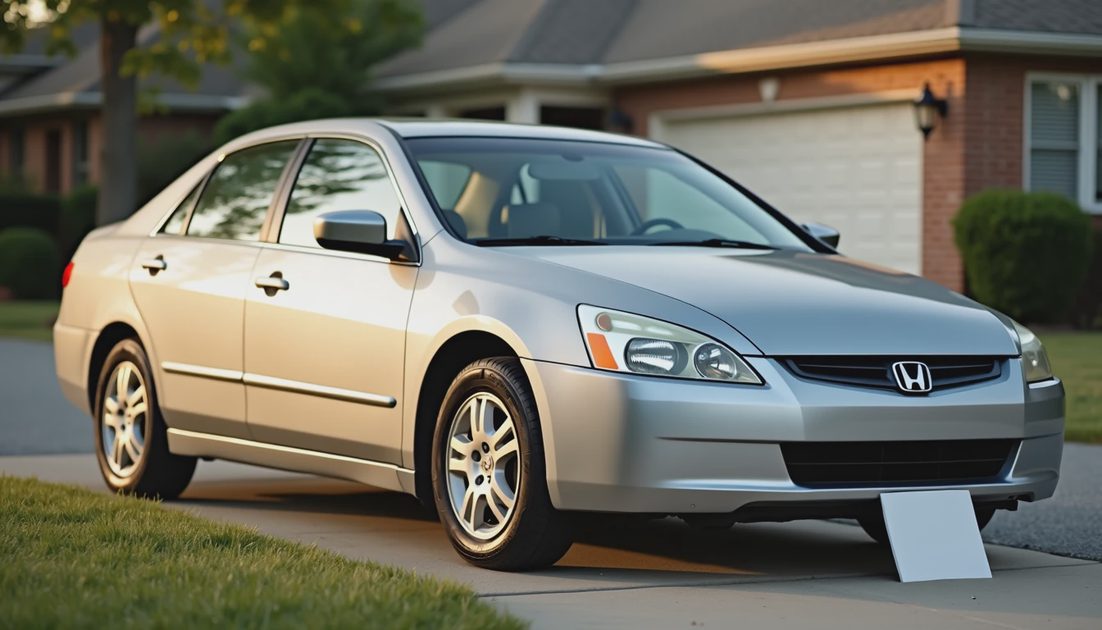
Two used cars. Same model. Same generation.
One is three years old. One is seven years old.
The three-year-old costs more. That's obvious. The question is whether the extra money buys you enough extra value.
I've run this comparison on multiple models. The answer isn't always the same. But there's a pattern.
Here's where the better value usually lives.
The case for the three-year-old car
A three-year-old car is often a lease return. One owner. Dealer-maintained. Still relatively new.
The big depreciation hit has already happened. The first owner took it. You're buying after the steepest part of the curve.
What you get for the extra money:
Lower mileage. Most three-year-old cars have between 30,000 and 45,000 miles. That's still early in the life of most modern cars.
More remaining life on wear items. Tires, brakes, battery. You're not replacing anything immediately.
Better safety and tech. Three years isn't that old. Backup cameras. CarPlay. Blind spot monitoring. Most of what you want is there.
Factory warranty may still be active. Some manufacturers offer five-year or longer warranties. You might get coverage for a year or two.
Financing is easier. Banks like cars that are newer and have lower miles. Rates are better.
The case for the seven-year-old car
A seven-year-old car costs significantly less. Sometimes half the price of the three-year-old version of the same model.
The question is whether the savings are worth what you give up.
What you get for the lower price:
More car for the same budget. You can often buy a higher trim level or a larger class of vehicle for the same money as a newer base model.
Less depreciation risk. A seven-year-old car has already lost most of its value. It won't drop much further if you sell in a few years.
Lower insurance costs. Older cars cost less to insure. Sometimes significantly.
What you give up:
Higher mileage. Usually between 70,000 and 100,000 miles. That's where maintenance needs start to accumulate.
Wear items are closer to replacement. Tires. Brakes. Shocks. Belts. None of these are disasters. But they're expenses the three-year-old car doesn't need yet.
Older tech. No CarPlay. Smaller screens. Fewer safety features. Maybe nothing you care about. But know what you're missing.
More repair uncertainty. A well-maintained seven-year-old car can be fine. But the probability of something breaking is higher. That's just math.
Financing is harder. Some banks add a point or two for older cars. Some have mileage limits.
The maintenance gap matters most
This is where the decision usually breaks.
A three-year-old car is likely to need nothing but oil changes and basic maintenance for the first few years of your ownership.
A seven-year-old car may need things soon. Tires. Brakes. A suspension component. Sometimes bigger things.
I'm not saying the seven-year-old car is a bad buy. I'm saying the price difference needs to account for what you're likely to spend.
I've seen people buy a seven-year-old car for much less than a three-year-old car, then spend the difference in repairs and maintenance over two years. They didn't save. They just spent the money at the shop instead of at the dealership.
I've also seen people buy a seven-year-old car, drive it for three years with minimal expenses, and come out way ahead.
The difference is the specific car's condition and history.
Where the math usually lands
After running this on several models, here's the pattern I see.
For reliable mainstream cars — Honda, Toyota, Mazda, some Ford and GM models — the three-year-old car often wins on total cost of ownership over five years.
The initial price is higher. But lower maintenance costs, fewer repairs, and better resale value at the end usually close the gap. Sometimes the three-year-old car ends up cheaper overall.
For luxury cars or models with questionable reliability, the answer flips. The seven-year-old car can be a trap. Lower purchase price. But maintenance and repair costs don't age like the price does. Those cars get expensive to keep.
For high-depreciation cars — some EVs, some domestic sedans — the three-year-old car is often a steal. The first owner took a huge hit. You're buying at a discount. The car is still relatively new.
The questions I ask before deciding
Here's what I run through for any 3-year vs 7-year comparison.
What does maintenance look like between 70,000 and 120,000 miles for this specific model? Some cars sail through. Some need major services.
Does the three-year-old car still have any factory warranty left? That has real value.
How long am I keeping it? If I'm keeping it for six or seven years, the three-year-old car will age out during my ownership. The seven-year-old car will be very old when I sell. That changes the math.
What's the actual price difference? Not percentage. Actual dollars. A small difference pushes me toward newer. A large difference makes older more interesting.
An example from my own research
I looked at a popular midsize sedan recently.
The three-year-old version was roughly one-third more expensive than the seven-year-old version.
Over five years, the three-year-old car had lower maintenance costs and better resale value. The total cost difference narrowed.
The seven-year-old car still came out slightly cheaper. But the gap was much smaller than the purchase price suggested.
I recommended the newer car to someone who wanted low hassle. I recommended the older car to someone who wanted to save every dollar and didn't mind a little risk.
Same question. Different answers. Because the person matters.
The bottom line
Three-year-old cars usually offer better total value on reliable mainstream models. You pay more upfront. You get more back in lower maintenance and better resale.
Seven-year-old cars can still win if the price difference is large enough and the specific model holds up well. But the gap in total cost is often smaller than people think.
Don't just look at the purchase price. Look at what you'll spend across the whole time you own the car.
The cheaper car upfront isn't always the cheaper car overall.