
Everyone knows cars need maintenance.
Oil changes. Tire rotations. Brake pads. The basics.
But those aren't the costs that surprise people. The surprises come from the line items buyers don't see coming. The ones that show up at 60,000 miles. The ones that aren't on the dealership's cheerful "complimentary first service" checklist.
Here are the maintenance items I see buyers underestimate every time.
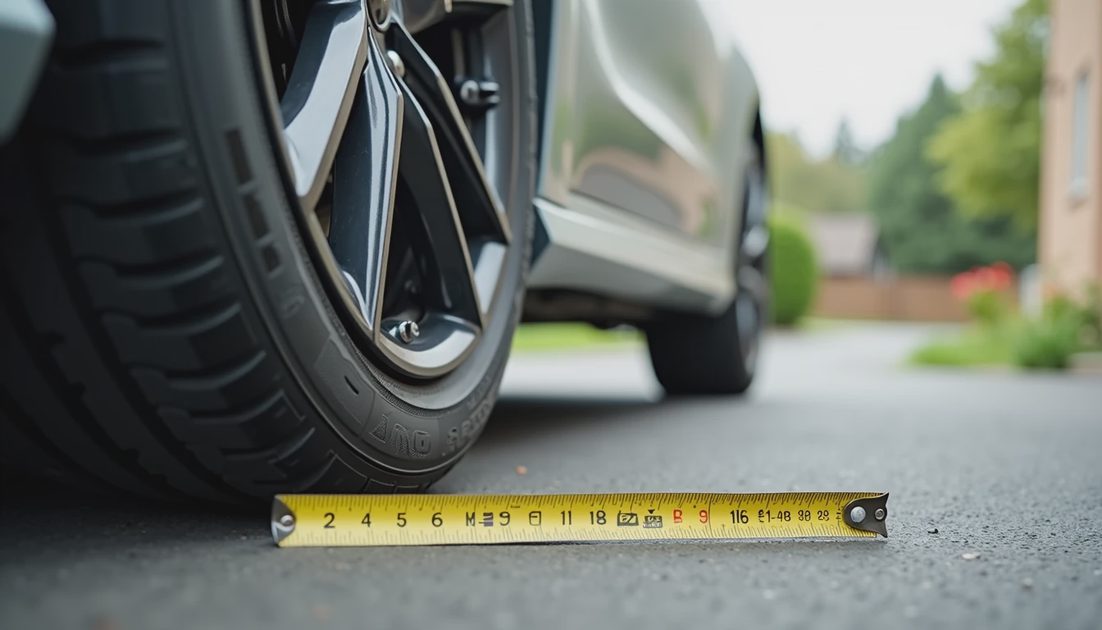
Tires on performance or all-wheel-drive cars
A set of basic all-season tires for a compact sedan is reasonable. You can find decent options without spending much.
Now look at a car with low-profile tires, staggered sizes (different widths front to back), or a performance-oriented AWD system.
Those tires cost more per corner. They wear faster because the rubber is softer. And on AWD cars with significant tread depth differences, you sometimes need to replace all four tires even if only one is damaged.
I've watched people buy a used sport sedan for a good price, then hand over a large amount for tires within the first year. They didn't budget for it because they looked at tire prices for a normal car.
Before you buy any car, look up the cost of a full set of tires for that specific model. If that number makes you uncomfortable, you're looking at the wrong car.
Brakes on heavier vehicles
Brake pads are cheap. Brake pads on a three-row SUV or an electric vehicle? Different story.
Heavier vehicles wear brakes faster. They also often require larger rotors and more robust pad compounds. The parts cost more. Some EVs and performance cars have two-piece rotors that cost multiples of a standard rotor.
And here's something buyers miss. Many newer cars require a scan tool to retract the electronic parking brake before you can change the rear pads. That turns a DIY job into a shop visit for most people.
The brake job that costs a few hundred on a compact car can cost over a thousand on a heavy SUV or EV.
Factor that in before you assume the maintenance will be similar.
The high-mileage service interval
Every car has a major service somewhere between 60,000 and 100,000 miles.
Spark plugs on a V6 or V8 can be expensive if they're buried under the intake manifold. Coolant flushes. Transmission fluid changes. Drive belts. Water pumps sometimes fail right around this window.
Buyers look at the first 30,000 miles of maintenance and assume the trend continues. It doesn't.
When you buy a used car with 50,000 to 60,000 miles, you're buying right before these costs hit. That's not a reason to avoid those cars. It's a reason to price the upcoming service into your purchase decision.
A car that looks like a great deal at 58,000 miles looks different after you spend money on the 75,000 mile service.
Suspension components on older cars
Shocks and struts wear out gradually. So gradually that most people don't notice until they drive a car with fresh suspension and realize what they've been missing.
A car with 80,000 to 100,000 miles is likely riding on original shocks. They're tired. The car feels floaty. It takes longer to stop because the weight transfers forward more than it should. The tires wear unevenly.
But the car still drives. So people ignore it.
Then they finally replace the suspension and spend a meaningful amount of money on something that wasn't "broken" — just worn.
If you're buying a car with higher mileage, either budget for suspension work or test drive a similar car with lower miles so you know what you're comparing to.
Batteries in modern cars
Not the high-voltage battery in an EV. The regular 12-volt battery that every car has.
Modern cars have more electronics than ever. They idle less. They sit with the ignition on and engine off. All of that drains the battery.
A standard battery costs a modest amount. But many newer cars with start-stop systems, advanced safety features, or luxury branding require specific battery types — AGM or lithium — that cost two or three times as much.
And here's the kicker. Many of those batteries need to be "coded" or "registered" to the car's computer when replaced. The car needs to know the battery is new so it doesn't overcharge it and kill it early.
That means a shop visit. Not a parking lot swap.
What looks like a simple battery replacement can turn into a several-hundred-dollar repair on the wrong car.
The feature you actually use
This one is different.
People worry about the engine blowing up. They don't worry about the power liftgate motor failing or the heated seat element burning out.
But which one are you more likely to face?
Engine failures on reliable models are rare. Power liftgate motors fail often. Heated seat elements break from normal use. Infotainment screens delaminate. Blind spot monitors lose calibration.
These repairs aren't cheap. A replacement mirror with integrated camera or blind spot radar can cost as much as a significant mechanical repair.
And unlike an engine problem, you can't ignore a failed backup camera. It's a safety feature you actually use every time you park.
When I research a car, I look up common failures of the convenience features, not just the engine and transmission. Those are the repairs most buyers never see coming.
The real cost of "I'll do it myself"
I see this all the time.
Buyer picks a car with a known expensive service item and says "I'll just do it myself."
Sometimes that works. Sometimes it doesn't.
Working on modern cars often requires special tools. Diagnostic software. A lift for certain jobs. The service manual for torque specs that aren't in the YouTube video.
And time. Your time has value even if you don't bill by the hour.
I'm not saying DIY is bad. I'm saying be honest about whether you actually have the tools, space, skill, and willingness to do the job. Most people overestimate themselves on at least one of those four.
If you wouldn't pay a shop to do the job, you probably shouldn't buy the car.
How I budget for these items
I add a maintenance reserve to every car I consider.
For a car under warranty or under 30,000 miles, I set aside a modest amount per year for tires and wear items.
For a car between 60,000 and 80,000 miles, I add significantly more. That's the major service zone. Suspension. High-mileage maintenance. Possibly tires and brakes depending on the car.
For a car over 100,000 miles, I assume something will need attention every year. Sometimes it's small. Sometimes it's not. The reserve needs to be large enough that a repair doesn't become a crisis.
Most buyers don't do this. They calculate whether they can afford the loan payment. They don't calculate whether they can afford the car breaking.