If you've been browsing Japanese import listings, the Toyota Alphard probably caught your eye. It's a luxury minivan that offers more passenger space and creature comforts than almost anything sold new in the US. But the Toyota Alphard price tag isn't as simple as a sticker on a dealer lot. You're looking at import fees, conversion work, and ongoing parts availability. Let's run the numbers.
What Is a Toyota Alphard and Why Do Americans Want One?
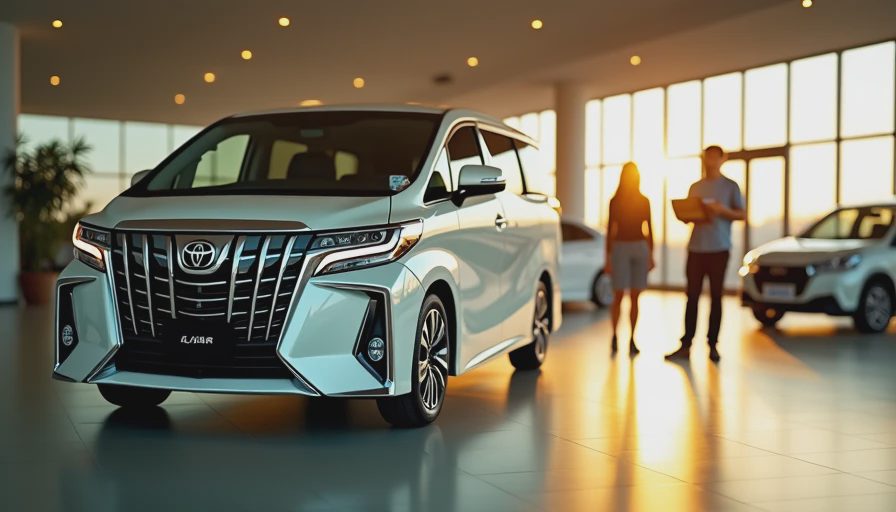
The Alphard is Toyota's flagship minivan in Asia and the Middle East. It's not sold new in the United States, which is exactly what makes it tempting. Think of it as a Lexus-level interior wrapped in a minivan body. Rear seats recline like first-class airplane seats, there's a panoramic roof, and the second row often has ottomans and massage functions. For a family that wants luxury without a full-size SUV, the Alphard checks a lot of boxes.
But here's the catch: because it was never officially imported, every Alphard you see on US roads is a used import, at least 25 years old to bypass federal safety and emissions rules. That means you're limited to models from 2000 or earlier. A newer model (2010 or newer) can only be imported under the "show or display" rule or as a non-compliant vehicle for off-road use, which is a huge headache. For most buyers, the only practical option is a 1999 or 2000 Alphard—the first generation.

Current Market Prices for a Used Toyota Alphard
What does an early Alphard cost in Japan? A 1999–2000 Alphard with around 100,000 km (62k miles) typically sells at auction for ¥600,000–¥1,000,000 ($4,000–$7,000). After shipping, import duties, EPA testing, and federalization, you're looking at a total vehicle cost at least $12,000–$15,000 before you even register it. If you hire a broker who handles everything, expect to pay $18,000–$25,000 for a clean example landed in the US.
The Toyota Alphard price at a US-based specialty import dealer is often $20,000–$30,000. That's roughly double what you'd pay for a comparable Chrysler Pacifica or Toyota Sienna of the same vintage. And those domestic vans are easier to insure, cheaper to repair, and come with airbags that meet US standards.
Importing Costs You Need to Know
Let me break down the line items that turn a $5,000 auction car into a $20,000 final bill.
- Auction fees and inland Japan shipping: $500–$1,000
- Ocean freight and insurance: $1,500–$2,500
- US customs duty (2.5% for passenger vehicles from non-FTA countries): 2.5% of the vehicle's value (usually based on auction price + shipping). On a $10,000 total, that's $250.
- EPA and DOT compliance: This is the big one. A 25-year-old vehicle is EPA/DOT exempt from testing, but you still need a letter of exemption and paperwork. If you're importing a newer model (illegal for road use), you'd need crash test data—easily $50,000+. Sticking to 25+ years old avoids that, but you'll still pay $1,000–$2,000 for compliance paperwork, bond release, and a customs broker.
- Modifications: Often the vehicle arrives and needs minor changes to pass state inspection—headlights, speedometer conversion from km/h to mph, sometimes add-on reflectors. That can be another $500–$1,500.
- State taxes and registration: Varies by state; budget 6–10% of the purchase price.
Is the Toyota Alphard Price Worth It Compared to a US Minivan?
Run the numbers. The Toyota Alphard price at $20,000 buys you a 25-year-old luxury minivan with no warranty, limited parts supply, and the constant risk of something you can't fix easily. For that same $20,000, you could buy a 2018–2020 Chrysler Pacifica or 2015–2017 Toyota Sienna with 40,000 miles, full maintenance history, and a parts network across the country.
The Alphard has better interior quality and more wow factor. But the Pacifica gets you modern safety features, CarPlay, and a usable third row that folds into the floor. The Sienna will drive another 150,000 miles without major repairs. If you're buying for status, the Alphard wins. If you're buying for your family's actual transportation needs, the domestic option is smarter.
How to Avoid Overpaying for a Toyota Alphard
The Toyota Alphard price can vary wildly depending on condition, mileage, and broker fees. Here are five steps to make sure you don't get taken:
- Check Japanese auction grading. Japanese cars are graded from 0 to 5. A grade 4 or higher means low mileage and no major damage. Stick to grade 4+ to avoid hidden rust or accident repairs.
- Compare multiple import brokers. Get quotes from at least three brokers, including well-known ones like JapaneseCarTrade.com and BeForward. Ask for a full breakdown of auction, shipping, EPA/DOT exemption, and inland transport.
- Budget for unexpected repairs. Add a 20% cushion to your estimated Toyota Alphard price. You'll likely need new tires, battery, fluid changes, and possibly suspension work. A $15,000 landed car can easily become $18,000 after a month of sorting.
- Check state lemon laws. Most grey-market imports are sold as-is. But some states require a warranty on vehicles over a certain price. You probably won't get one with an Alphard, but it's worth asking.
- Get a pre-purchase inspection in Japan. Services like Junkai or JEVIC can inspect the car at the auction yard for a few hundred dollars. It's worth the upfront cost to avoid a $20,000 mistake.
Following these steps will keep your Toyota Alphard price close to market value and reduce the chance of buying a car that needs five figures in repairs.
Final Take: Who Should (and Shouldn't) Buy One
The Alphard makes sense for a very specific buyer: someone who has another daily driver, wants a weekend toy to take to car meets, and is willing to learn how to source parts from Japanese importers like RHD Japan or Amayama. If you're on a budget and need a minivan for the school run, skip it.
Also factor in insurance. Many US companies won't cover a grey-market vehicle. You'll likely need a specialty insurer like Grundy or Hagerty, which costs more—plan on $1,000–$2,000 per year for declared value coverage.
If the numbers don't work, the car doesn't work. The Toyota Alphard price is high for what you actually get as a family hauler. It's a conversation piece, not a value proposition.