
Is the Mazda CX-90 Worth Your Money? A Practical Cost Breakdown
If you're shopping for a three-row SUV, the Mazda CX-90 has probably caught your eye. It looks sharp, drives better than most rivals, and comes with a premium interior at a price that undercuts the German options. But as a buyer who values arithmetic over hype, I want to know: does the Mazda CX-90 make financial sense over five or seven years of ownership? I've been running the numbers on this new model since it hit dealerships, and here's what I've found.
Let's start with the upfront price. The 2024 Mazda CX-90 starts around $40,000 for the base Turbo model and climbs to nearly $60,000 for the top-trim Turbo S Premium Plus. That's competitive with the Honda Pilot and Kia Telluride, but the CX-90 offers a standard inline-six engine and rear-wheel-drive bias, which is unusual in this class. If you go for the plug-in hybrid (PHEV) version, you're looking at roughly $47,000 base, before any federal tax credit. The PHEV can save you on gas if you charge regularly, but the EV range is only about 26 miles, so real-world savings depend heavily on your driving pattern.
Depreciation and Resale Value: What the Market Expects
Now, let's talk about what happens after you drive off the lot. Depreciation is a big factor for any new car, and Mazda has historically held value better than non-luxury Japanese brands, but not as well as Toyota or Honda. Early data suggests the CX-90 may depreciate around 40% to 50% over five years, which is about average for the segment. That means a $50,000 CX-90 could be worth roughly $25,000 to $30,000 after five years. Not awful, but not a standout. If you plan to keep the car a long time, depreciation matters less.

Where the Mazda CX-90 really grabs my attention is in the driving experience. It's genuinely fun to drive for a three-row SUV, with responsive steering and a smooth, powerful engine. But here's the thing: fun driving usually comes with trade-offs in fuel economy. The turbo inline-six gets an EPA-estimated 24 mpg combined (25 city/28 highway for the base engine, slightly less for the higher-output version). That's about average for the class—a Honda Pilot gets 22 mpg combined, and a Kia Telluride gets 23. The CX-90's PHEV version is rated at 56 MPGe combined and 25 mpg combined when running on gas alone. If you charge often, you can see big savings, but if you rely mostly on the gas engine, the fuel cost is similar to the regular model.
Insurance is another cost that often surprises buyers. The Mazda CX-90 falls into a moderate insurance bracket—not as cheap to insure as a mainstream SUV like a Toyota Highlander, but not as expensive as a luxury brand. Expect to pay around $1,600 to $2,000 per year for full coverage, depending on your driving record and location. That's about $100 to $150 more than a comparable Honda Pilot. It's not a dealbreaker, but it adds up over five years.
Reliability and Maintenance: What to Plan For
Reliability is a big question mark for a brand-new model. Mazda has a good track record overall, but first-year models often have teething problems. The CX-90 uses a new platform, new engine, and a new eight-speed automatic transmission (which is actually a unibody design with an integrated clutch, not a traditional torque converter). Early owner reports have mentioned some transmission hesitation and minor electronic glitches, but nothing catastrophic so far. I'd recommend waiting for the second model year (2025) if you want the bugs worked out, or buying a certified pre-owned CX-90 a couple years down the road.
Maintenance costs for the CX-90 should be reasonable. Mazda's recommended service intervals are every 5,000 miles for oil changes and every 30,000 miles for major services. Over 60,000 miles, you're looking at roughly $2,500 to $3,000 in scheduled maintenance, which is on par with the segment. The PHEV version may have slightly lower maintenance costs because of regenerative braking and less engine wear, but battery health remains a long-term unknown.
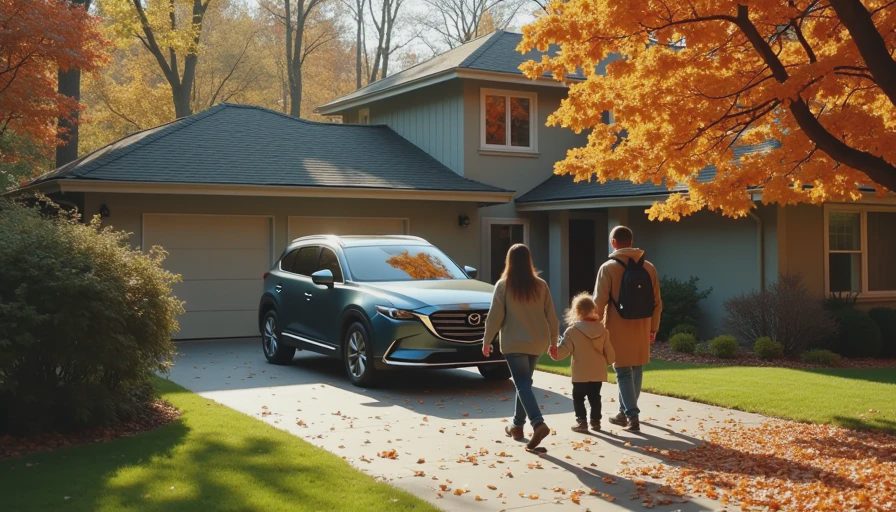
Let's factor in the true cost to own. Using a five-year, 60,000-mile ownership period with average driving patterns, the total cost for a $50,000 Mazda CX-90 (including depreciation, insurance, fuel, maintenance, taxes, and fees) comes to roughly $55,000 to $60,000. That breaks down to about $900 to $1,000 per month. Compare that to a $45,000 Honda Pilot, which costs around $50,000 to $55,000 total over the same period. The CX-90 costs more upfront and in fuel, but you get a more engaging driving experience and a more upscale interior. Whether that premium is worth it depends on your priorities.
Now, what about the used market? If you want the Mazda CX-90 but don't want to eat the first-year depreciation, look for a one- to two-year-old model. Early 2024 units are already appearing on lots with 10,000 to 20,000 miles, priced around $38,000 to $45,000. That saves you $5,000 to $10,000 off the original MSRP, and you still have most of the factory warranty left. If you can find a certified pre-owned CX-90, even better—the CPO program adds a 7-year/100,000-mile powertrain warranty, which gives peace of mind on a new platform.
So, is the Mazda CX-90 a smart buy? If you prioritize driving dynamics and interior quality over absolute lowest cost, yes. If you're purely cost-conscious, a Honda Pilot or Toyota Grand Highlander will save you money on purchase price and fuel. The CX-90 is not a budget hero, but it's not a bad deal either—it's a compromise worth making if you want something that doesn't feel like an appliance.
In the end, the Mazda CX-90 is a solid choice for buyers who want a three-row SUV that's genuinely enjoyable to drive, with acceptable ownership costs. But run your own numbers based on your driving habits and local prices. If the math works, the car works.