
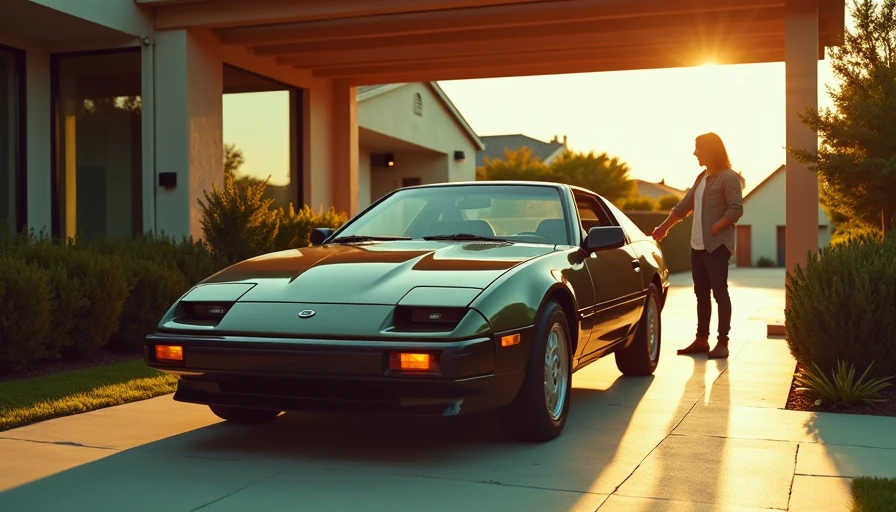
You’ve seen the wedge-shaped body, the pop-up headlights, and that digital dash that still looks like a prop from Blade Runner. The 1985 Nissan 300ZX is one of those cars that grabs attention at every cars and coffee. But if you’re thinking about parking one in your driveway, the nostalgia needs a reality check. As a procurement analyst who runs the numbers on everything, I’m here to tell you whether the 1985 Nissan 300ZX is a smart buy or a money pit.
Let’s start with the obvious: these cars are old. Even the cleanest examples are pushing 40 years. And while the Z31 generation (1984–1989) has a loyal following, the 1985 model year sits right in the sweet spot of early digital tech and still-available parts. But “available” doesn’t mean cheap. So before you swipe your card, run the numbers.

Purchase Price and Depreciation
A clean 1985 Nissan 300ZX in good condition will set you back anywhere from $8,000 to $20,000 depending on mileage, maintenance history, and whether it’s the turbo model. The non-turbo VG30E is cheaper to insure and easier to work on, while the VG30ET turbo adds complexity and potential headaches. Unlike modern sports cars, these have already hit their depreciation floor—they’re not going to lose half their value in five years. In fact, prices for well-kept examples have been creeping up. A 1985 Nissan 300ZX that’s rust-free and mechanically sound might appreciate modestly over the next decade, but don’t buy it as an investment. Buy it because you want to drive it, and hope the numbers don’t go red.
Maintenance and Reliability
Here’s where the math gets dicey. The 1985 Nissan 300ZX is a product of its era: electronics that are now brittle, rubber seals that harden, and a fuel system that doesn’t like ethanol-heavy modern gas. Common issues include failing digital dash clusters (good luck finding a replacement), leaky injectors in turbo models, and timing belt intervals that need attention every 60,000 miles—and a broken timing belt on these engines means bent valves. If you can turn a wrench, parts are manageable: alternators, starters, and brake parts are still available. But if you’re paying a shop, budget $1,000–$2,000 per year in average repairs. A recent forum post I saw reported a $3,500 bill for a transmission rebuild on a 1985 model. That’s real money. Factor it into your purchase decision.
Insurance Costs
Classic car insurance can be your friend here. Because the 1985 Nissan 300ZX is often classified as a collector vehicle, insurers like Hagerty and Grundy offer agreed-value policies for as little as $300–$800 per year if you drive it limited miles (typically under 5,000 miles annually). That’s cheap. But if you plan to daily drive it, standard insurance from GEICO or Progressive will treat it like any other 40-year-old car—liability coverage is cheap, but comprehensive and collision can be pricier because parts are scarce. Get quotes both ways before you commit.
Fuel Economy and Daily Usability
Let’s be honest: the 1985 Nissan 300ZX is not a fuel-sipper. The non-turbo gets about 18 city / 25 highway MPG, and the turbo is worse—think 16 city / 22 highway. With premium gas recommended, you’re looking at around $0.25 to $0.30 per mile in fuel costs alone. Compare that to a modern sporty car like a 2025 Mazda Miata that gets 30+ MPG on regular. The ride is firm, the cabin is snug, and the AC might not freeze you out on a Texas summer day. This is a weekend toy, not a commuter. If you try to daily drive it, the numbers will burn a hole in your pocket.
Verdict: Should You Buy a 1985 Nissan 300ZX?
If the numbers don’t work, the car doesn’t work. For a 1985 Nissan 300ZX to make financial sense, you need to be ready for moderate appreciation risk, plan to do your own wrenching, and keep it as a second car. If you can find a solid example for under $12,000, have a garage, and budget $1,500 per year for maintenance, you’ll end up with a cool, iconic car that still turns heads. But if you’re stretching your budget to get into any 1985 Nissan 300ZX, that’s a mistake. Wait for the right car at the right price—there are plenty of Z31s out there. The smarter buy is the car that leaves you with cash left over for repairs and a full tank of premium. That’s the real victory.
**TL;DR:** The 1985 Nissan 300ZX can be worth it if you buy the right one and keep your expectations real. Otherwise, the upkeep numbers can turn this dream into a nightmare. Run the numbers first.