

If you're shopping for an **electric pick up truck**, you've probably seen the headlines: massive horsepower, instant torque, and a frunk big enough to double as a cooler. But the real question isn't whether the specs look good on paper. It's whether the numbers work for your wallet—upfront, month to month, and years down the road. Let's run the math on the current crop of electric trucks and see which one actually makes sense.
What You'll Actually Pay Upfront
The price of an **electric pick up truck** varies wildly depending on the brand and trim. The Ford F-150 Lightning starts around $55,000 for a Pro model, but you'll be waiting a while. The Rivian R1T goes from $73,000 to well over $90,000. Chevy's Silverado EV starts at about $75,000 for the WT, and the Tesla Cybertruck—well, who knows when it'll actually hit production? The point is, you're looking at $50k to $100k before any tax credits. Most buyers will qualify for the $7,500 federal credit if the truck and their income meet the rules, but that still leaves a hefty down payment.

Where Insurance Gets Tricky (and Expensive)
Here's where the **electric pick up truck** can surprise you. Insurance premiums for these trucks are often higher than comparably priced gas trucks. Why? Repair costs. Aluminum body panels, advanced sensors, and huge battery packs mean any collision costs more to fix. A typical F-150 Lightning might cost $2,000 to $3,000 a year to insure, while a Rivian can push $3,500 or more depending on your driving record and location. Compare that to a gas F-150 at roughly $1,500–$2,000. Shop quotes before you buy—don't let a premium you didn't budget for eat your savings.
Long-Term Savings vs. Hidden Costs
Fuel savings are real. Electricity costs less per mile than gasoline, especially if you charge at home. But don't ignore the other side: depreciation. Electric trucks are new territory, and used values are still volatile. Early data suggests some models lose value faster than gas equivalents because of battery warranty concerns and rapid tech improvements. Also, maintenance isn't zero. Tires wear faster on heavy EVs, and you'll still need suspension and brake work. Run the numbers over five years: an **electric pick up truck** might save you $3,000–$5,000 in fuel but cost an extra $2,000 in insurance and $1,000 in tires. The net can still be positive, but it's tighter than the hype suggests.
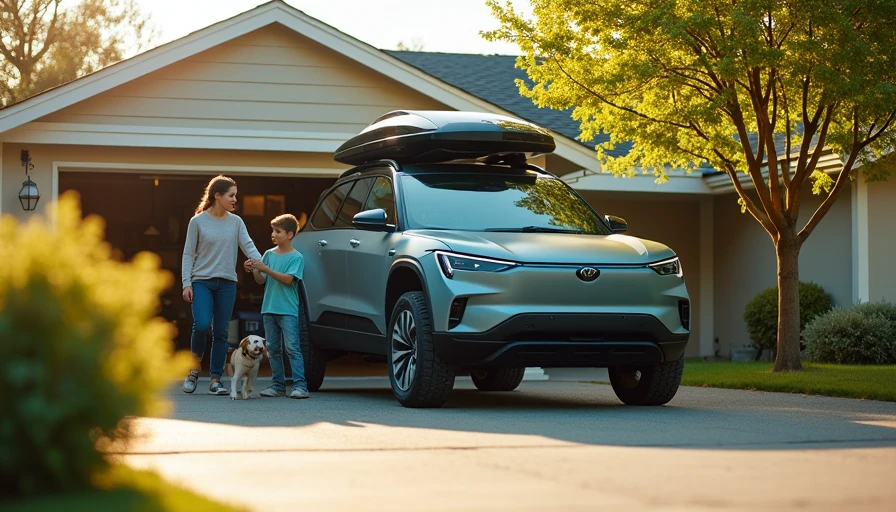
Which Electric Pickup Makes the Most Sense Today?
Right now, the Ford F-150 Lightning and Rivian R1T are the two real options you can actually buy. The Lightning is the safer bet if you want a work truck that's familiar but electric. It's cheaper, parts are easy to get, and it qualifies for the full tax credit in most cases. The Rivian is more luxury, better off-road, but expensive and insurance will sting. The Chevy Silverado EV isn't out yet in volume, and the Cybertruck is a wait-and-see. My advice: don't let the novelty of an **electric pick up truck** push you into a stretched budget. If the numbers don't work, the car doesn't work.
A Quick Pre-Purchase Checklist for Electric Truck Buyers
Before you commit, run through this checklist to avoid surprises:
- **Check your home's electrical panel.** Most Level 2 chargers need a 240V outlet and a dedicated breaker. If your panel is old or near capacity, expect $500–$2,000 for an upgrade. Get a quote from a licensed electrician before buying the truck.
- **Research state and local incentives.** The federal $7,500 credit is just the start. Some states offer an extra $2,500 rebate, and utilities may have discounted overnight rates. Stack every incentive you can—it can knock $10,000 off the effective price.
- **Get insurance quotes for the specific model.** Don't assume your current insurer will be cheapest. Shop three carriers. Ask about EV-specific discounts, like low-mileage or bundled policies. Premiums vary by zip code, so run the VIN of the truck you want.
- **Estimate your total cost of ownership.** Use an online calculator that includes depreciation, fuel, insurance, maintenance, and taxes. For a $70,000 EV, the five-year cost could be $55,000–$65,000 after resale. Compare that to a similar gas truck.
- **Take a long test drive.** Drive the truck for at least an hour on mixed roads. Pay attention to range anxiety, ride quality, and how the regenerative braking feels. An electric truck behaves differently, and you need to be comfortable with the experience.
- **Factor in tire replacement.** EVs weigh more, so tires wear out faster. Plan for a new set every 30,000–40,000 miles at $800–$1,200 per set. That's a recurring cost you can't avoid.
Ticking these boxes won't guarantee a perfect purchase, but it'll surface any deal-breakers before you sign.
Final Verdict
An **electric pick up truck** can be a smart move—if you're ready for the higher purchase price and insurance costs. Figure out your total five-year cost, including depreciation and charging, before you sign. For many people, a gas truck or a hybrid will still be the better financial call. But if you're set on electric, do your homework, compare quotes, and buy only what fits your real budget. The right **electric pick up truck** is the one you can afford to keep.